Hair Color for Curly Hair
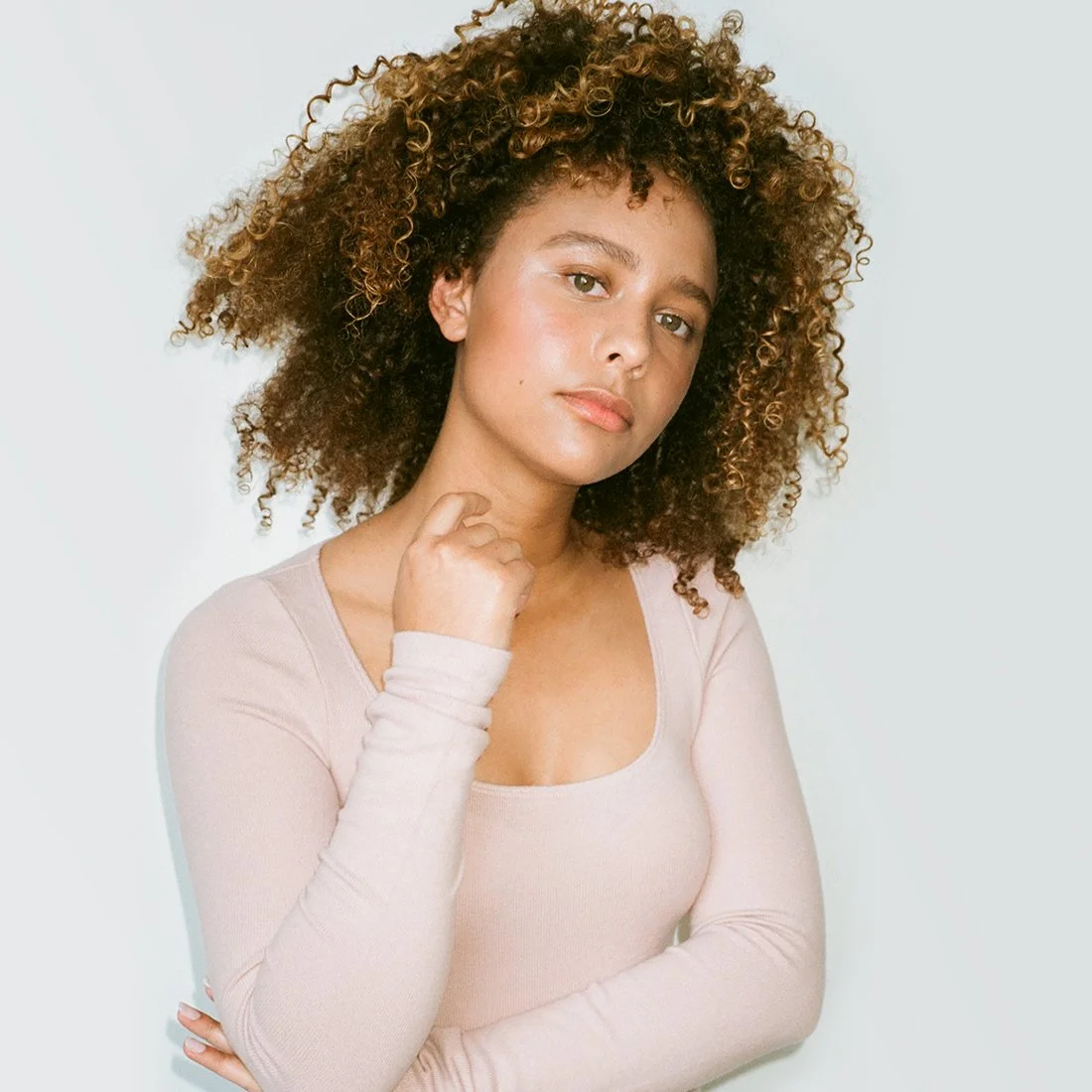
Curly hair can absolutely be colored beautifully, the key is protecting the curl pattern by using a bond-building, low-damage approach and a colorist who understands texture. For curls, hand-painted balayage usually flatters more than traditional foil highlights because it follows the way curls move and grows out softly. To color curly hair without damage, work with an experienced colorist, add a bond-builder like K18, use a gentler lift, and keep hair deeply conditioned. If you want color with almost no commitment, a gloss adds shine and tone with no lift and no lasting damage.
Balayage is often the best-looking, lowest-maintenance color for curls because it is hand-painted to follow how curls fall and grows out without a harsh line.
Traditional highlights give brighter, more uniform lift, but foils can read stripey on curls if the colorist does not place them for texture.
The biggest risk of coloring curls is damage to the curl pattern; bond-builders, gentle lift, and deep conditioning protect it.
Copper, honey, and warm dimensional tones are trending because they flatter texture and hide regrowth beautifully.
A gloss is the lowest-commitment color service, it adds shine and tone, tames brass, and causes no lasting damage.
Can You Color Curly Hair? (And What to Know First)
Yes, curly and textured hair takes color beautifully, dimension and highlights actually show off the movement of curls in a way straight hair cannot. But curls do come with two considerations. First, textured hair is naturally drier because scalp oils travel down a curl less easily, so it is more sensitive to the drying effect of lightener. Second, the health of your curl pattern, its spring, clump, and definition, depends on the integrity of the hair’s internal bonds, and aggressive lightening can weaken those bonds and loosen or frizz your curl.
None of that means you should avoid color. It means you should color with a colorist who works with texture and uses a curl-protective process. At Live By The Sword Salon, every color service starts with a complimentary color consultation, and our stylists, including Creative Director Kristina, who is known for working with curly clients, build the service around your texture and goals.
Highlights vs. Balayage for Curly Hair: What Looks Best?
Both add lightness and dimension, but they are applied differently and give different results on curls. Here is the side-by-side.
Why balayage usually wins for curls: because color is hand-painted to follow how your curls fall, balayage reads as natural dimension rather than rows of stripes. It also grows out without a harsh demarcation line, which means fewer salon visits, a real advantage for textured hair that you want to keep healthy. For most curly clients who want a soft, low-maintenance result, balayage is the better-looking choice.
When traditional highlights make sense: if you want brighter, more uniform lift throughout, foils deliver more overall brightness. The key is a colorist who places and weaves foils with your curl pattern in mind so the result looks blended, not banded. Many curly clients end up with a customized blend of both techniques, painted pieces for softness plus a few foils around the face for brightness.
For a full breakdown of techniques including foilayage (a foil-plus-balayage hybrid built for maximum brightness on darker bases), see our dedicated comparison post on balayage, highlights, and foilayage.
How Do You Color Curly Hair Without Damaging the Curl Pattern?
This is the number-one concern for curly clients, and it is a fair one, but modern color technology makes healthy color very achievable. Protecting your curl pattern comes down to six things.
Start with a colorist who knows texture. Curl-literate colorists choose gentler formulas and placement that flatters movement, and they know when to say no to a change that would over-stress your hair.
Use a bond-builder. Additives and treatments like K18 (which we use at Live By The Sword) help protect and rebuild the internal bonds that give curls their strength and spring during and after lightening.
Choose the gentlest lift that achieves the goal. Lower-volume developer, fewer sessions, and techniques like balayage that do not saturate the scalp keep more of your curl integrity intact.
Go gradual for big changes. Reaching a dramatically lighter shade in one marathon session is the fastest way to compromise curls. Lightening over a couple of sessions protects the pattern.
Commit to hydration and treatments. Colored curls need moisture. Regular deep conditioning and bond treatments, plus curl-friendly products at home, keep definition intact.
Book a consultation for color corrections. Any major change or correction should begin with a consultation so your colorist can assess your hair’s current condition before touching it.
Do all six, and colored curls can stay just as springy, shiny, and defined as virgin hair.
Which Curly Hair Color Trends Actually Flatter Texture?
Some shades are simply built for curls. The trending directions right now share one thing in common: warmth and dimension, which make texture look richer and disguise regrowth.
Copper curls. Rich copper and ginger tones are having a major moment, and they are gorgeous on curls because the warmth catches the light across every bend of the curl. Copper flatters warm and neutral skin tones especially well and can be done as an all-over shade or as dimensional copper balayage.
Honey highlights. Soft, golden honey tones woven through a brunette or dark-blonde base give curls sun-kissed dimension without a stark contrast. Because the tones blend into your natural color, honey highlights grow out softly and forgive a long stretch between appointments.
Dimensional brunettes and lived-in color. Warm chocolate, chestnut, and caramel-ribboned brunettes add depth and shine while keeping maintenance low. This family flatters nearly every curl type and skin tone.
The reason warm, dimensional color works so well on texture is simple: curls create their own highs and lows as they spring and fold, and dimensional color amplifies that natural play of light. Flat, single-block color can actually make curls look less defined by comparison.
Should Curly Girls Get a Gloss?
Yes, a gloss is one of the best low-commitment color services for curly hair, and it is often the perfect starting point if you are hesitant about permanent color. A gloss (also called a glaze) is a semi-permanent, demi-permanent-style treatment that adds shine, refreshes or shifts tone, and cancels unwanted brassiness, all with no lift and no lasting damage.
For curls, a gloss does three things especially well. It boosts shine, which reads as health on textured hair that tends toward dryness. It refines tone, knocking out brass on lightened curls or adding warmth to a flat brunette. And it requires zero long-term commitment, since it fades gradually and gently over a few weeks rather than growing out with a line. Many curly clients use a gloss between color appointments to keep their tone fresh, or as a first, low-stakes way to experiment with warmth before committing to highlights or balayage.
If you are curl-curious about color but nervous about damage, a gloss is the answer: maximum shine and tone, minimum commitment.
Frequently Asked Questions
-
Balayage is usually better for curls because it is hand-painted to follow curl movement, looks soft and natural, and grows out without a harsh line. Highlights give brighter, more uniform lift and can work well when foils are placed with your curl pattern in mind.
-
It does not have to. Damage to the curl pattern comes from aggressive lifting without protection. Using a bond-builder like K18, a gentle lift, gradual sessions for big changes, and consistent deep conditioning keeps curls defined and healthy.
-
A gloss or glaze is the lowest-damage option because it adds shine and tone with no lift. For dimension, balayage with a bond-builder is a low-damage way to add lightness.
-
Warm, dimensional shades flatter texture best, copper, honey highlights, and caramel-ribboned brunettes all catch the light across the curl and hide regrowth beautifully.
-
Balayage and glosses stretch longest, often 10 to 14 weeks between visits, because they grow out softly. Traditional highlights typically need a touch-up every 6 to 8 weeks.
-
A gloss is a semi-permanent treatment that adds shine and tone with no lift or lasting damage. It generally lasts a few weeks and fades gradually rather than growing out with a visible line.
Curious about color for your curls? Book a complimentary color consultation at Live By The Sword Salon in Williamsburg, Brooklyn, and we’ll build a curl-protective plan around your goals.